

Tips on
Electrical System Use and Maintenance
Part I : Introduction
by David H. Pascoe, Marine surveyor
Part I - Part II - Part III - Part IVFull Article
If you've owned a boat for any length of time, you
probably know that insurance companies hire independent marine surveyors
to conduct insurance surveys on the boats that they insure. One of the
most common problems that surveyors run across in doing these surveys are
electrical systems that have either been jury-rigged by the owner, or an
owner who hired Joe-the-Electrician down the street because Joe's work is
cheap. Joe is the guy who knows how to wire a house and thinks that boats
are no different. The house business isn't so good, so he switched to
boats.
By the time a boat gets a few years on it, the amount of substandard and/or jury-rigged wiring on it can add up to substantial numbers of faults. Much to the consternation of the owner, when the insurance surveyor comes along, he ends up handing the owner a long, and frequently costly, list of things that need to be corrected. Even more seriously though, is what substandard wiring can do to your overall system, not the least of which are chronic battery drain, frequent system faults, or even causing electrolysis and fires. In the last month alone, I caught two boats that were about to go up in flames, and one that actually did catch fire during the course of a survey. One because the owner had installed air conditioning controls below a companionway hatch that got wet and shorted out, the other due to an improperly wired service outlet.
Let's begin with the fact that a boat is not a house or a car, simply because the later two don't float in water, which is what makes a boat inherently different. Especially a boat that floats in sea water because sea water is a fair conductor of electricity. Therefore, there are lots of additional rules about the materials and methods of installation that you won't find on land based vehicles or structures. Because water (both inside and outside the boat) provides a very convenient ground path for electricity, we have to be a lot more careful how we do things.
Marine Electricians
There are no schools for boat electricians, only ship electrical engineers, except for the occasional vocational school. Most marine electricians are basically self-educated by means of attending seminars and the like. When hiring an electrician, you should not take their word for it because it says so in the ad, or your friend said Joe was really cheap. The least you can do is ask for a resume, since long experience is probably the best criteria.
Materials & Equipment
It is important that only equipment and materials rated for marine application should be used. The American Boat and Yacht Council (ABYC) has very stringent standards for this, as does Underwriter's Laboratories. This means things like common wire and wiring devices, as well as electrical equipment, should not be used. That non-marine fan, airconditioner or battery charger, because the electrical apparatus is not properly constructed, insulated or grounded could either start a fire, or worse, result in an electrocution. Federal regulations require that all electrical devices used in the engine compartment or bilges be "ignition protected" meaning they won't create sparks that can cause a fire or explosion.
One of the worst offenses we see on boats is the use of extension cords and other non marine wire, even such things as audio speaker wire and household lamp cord on high voltage systems. No, I'm not kidding. speaker wire carrying 125 volts. You should never use household wiring devices, such as multiple outlet expanders, or wire. Purchase electrical supplies only from a reputable marine supplier. Wire must have the proper temperature, water and oil resistant ratings and is hard to come by at retail outlets.
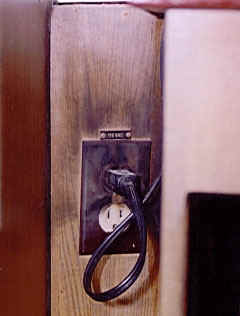
This service outlet was replaced by some one who didn't understand high voltage wiring and this is the result. The breaker was very old and the contacts fused closed and would no longer trip. This photo was taken during a survey while the wood behind the panel was burning. The owner showed no concern about it, thought it wasn't serious.
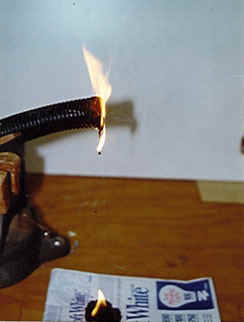
Here's a good reason why this ribbed plastic conduit should not be used on boats. Not only is it highly flammable, but it spreads the fire.
- Part I: Introduction with 2 photos
- Part II: High Voltage (AC) Systems with 0 photos
- Part III: DC Systems with 6 photos
- Part IV: Adding New Equipment with one photo
- Or Full Article
Posted November 15, 1998 (First posted July 14, 1998 at www.yachtsurvey.com. Revised and added two pictures November 02, 1998. Page design changed for this site.)


Over 180
Online Articles by David Pascoe

Power Boat Books
 Mid Size Power Boats
 A Guide for Discriminating Buyers
Focuses exclusively cruiser class generally 30-55 feet
With discussions on the pros and cons of each type: Expresses, trawlers, motor yachts, multi purpose types, sportfishermen and sedan cruisers.
Selecting and Evaluating New and Used Boats
Dedicated for offshore outboard boats
A hard and realistic look at the marine market place and delves into issues of boat quality and durability that most other marine writers are unwilling to touch.

2nd Edition
The Art of Pre-Purchase Survey The very first of its kind, this book provides the essentials that every novice needs to know, as well as a wealth of esoteric details.
Pleasure crafts investigations to court testimony The first and only book of its kind on the subject of investigating pleasure craft casualties and other issues.